
Published by Bigfoot Arts Education Wales | Reading time: 5–6 minutes
Filmmaking captures children’s imaginations in a way few other learning experiences can.
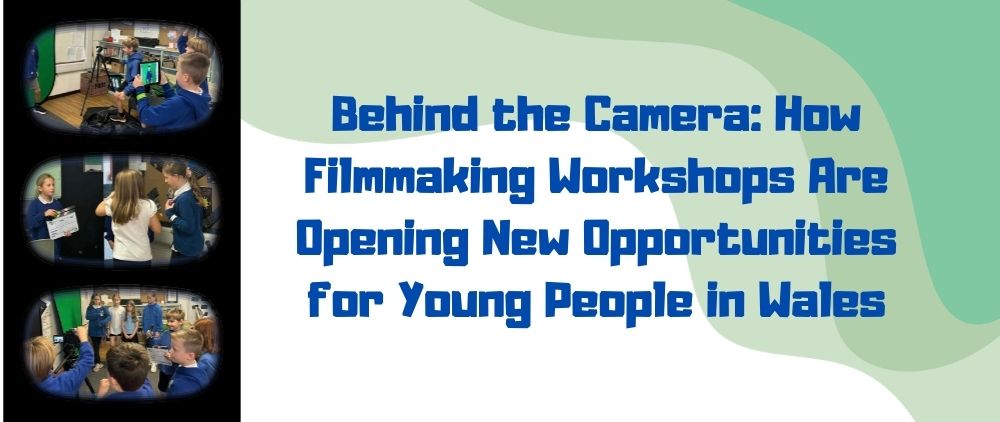
From the moment pupils step into a filmmaking workshop, something shifts. The classroom becomes a film set. Pupils take on new roles, collaborate in mixed teams, and work together to bring stories to life.
At Bigfoot Wales, our brand-new filmmaking workshops take children through the full filmmaking process, introducing tried-and-tested filmmaking skills while building confidence, creativity and collaboration.
What makes these workshops particularly powerful is that every child has a role. Whether working as a First Assistant Director, camera operator, runner, or performing in front of the camera, pupils quickly become part of a production team.
Even the most reluctant learners often become engaged, enthusiastic and confident as they explore new roles and responsibilities.
Teachers frequently tell us how valuable it is to see pupils working together in mixed groups of different abilities — groups that may not usually form within classroom settings. During filmmaking workshops, everyone works equally, supporting one another, sharing ideas and collaborating creatively.
This inclusive approach ensures that every child can participate, contribute and succeed.
Taking Children Through the Filmmaking Process
Our filmmaking workshops introduce pupils to how films are really made. Using professional filmmaking concepts in an accessible and engaging way, children explore:
- Camera angles and shots
- Lighting and atmosphere
- Sound and recording techniques
- Acting for camera techniques
- Working as a production team
- Green screen filming
As pupils move through the workshop, they gain a practical understanding of storytelling through film while developing communication and collaboration skills.
Children experience what it is like to work as part of a production team, learning how different roles come together to create a final piece of film.
Every Child Has a Role
One of the most powerful aspects of filmmaking workshops is that every child can take part.
Pupils take on roles such as:
- Director
- First Assistant Director
- Camera Operator
- Sound Operator
- Clapperboard
- Runner
- Actors
- Lighting
Even the most reluctant children often become enthusiastic about trying different roles. Some pupils enjoy working behind the camera, while others gain confidence performing. Others prefer supporting roles that are equally important to the production.
Because filmmaking offers such a wide range of opportunities, the workshops are fully inclusive and offer something for everyone.
Mixed Ability Collaboration
Teachers often highlight how valuable it is to see pupils working in mixed groups of different abilities.
Filmmaking naturally encourages collaboration. Pupils work together towards a shared creative goal, supporting one another and sharing ideas.
Teachers frequently comment that children who may not usually work together begin collaborating confidently. It doesn’t matter what level pupils are working at — everyone contributes equally.
This creates an environment where pupils feel comfortable being expressive, creative and collaborative, while developing teamwork and communication skills.
Opening Doors to Careers in Wales
Another important element of our filmmaking workshops is introducing pupils to real opportunities within Wales’ growing creative industries.
Wales has become a major hub for film and television production. With Dragon Studios in Rhondda Cynon Taf, BBC Studios and production companies in Cardiff Bay, and major streaming productions — including Netflix productions filmed across Wales — there are increasing opportunities for careers within the film and television industry.
We talk to pupils about these opportunities and explain how filmmaking involves a wide range of roles — from directors and camera operators to sound technicians, lighting teams and production assistants.
Introducing children to these possibilities helps broaden aspirations and encourages young people to consider creative careers right here in Wales.
Filmmaking and the Curriculum for Wales
Filmmaking workshops delivered by Bigfoot Wales align strongly with the Curriculum for Wales and support multiple Areas of Learning and Experience.
Workshops can also be themed to support classroom learning, including:
- Literacy and storytelling
- Welsh legends and storytelling
- History topics
- Wellbeing themes
- Pupil voice projects
- Environmental learning
Filmmaking supports:
Expressive Arts — Creativity and performance
Languages, Literacy and Communication — Speaking and storytelling
Health and Wellbeing — Confidence and collaboration
Humanities — Exploring themes and ideas
Science and Technology — Digital competence and media skills
Filmmaking also supports the Four Purposes, helping children become:
- Ambitious, capable learners
- Enterprising, creative contributors
- Ethical, informed citizens
- Healthy, confident individuals
Maesycwmmer Primary School, Caerphilly
During a recent filmmaking workshop at Maesycwmmer Primary School, pupils explored filmmaking techniques and worked collaboratively as production teams.
Liam Coupland, Science and Technology Lead and Year 2/3 Teacher, said:
“This was a practical, visual, exciting whistle-stop tour of filmmaking. This workshop gave children confidence to explore and try new ideas, which they will take forward into further filmmaking work.”
Teachers also noted how engaged pupils were throughout the workshop and how quickly confidence developed.
Pil Primary School, Bridgend
At Pil Primary School, Bigfoot Wales returned for the third time to deliver filmmaking workshops, reflecting the school’s continued commitment to creative learning and the impact of previous visits.
During this visit, pupils worked collaboratively with Bigfoot to create a film titled “From Wales to Patagonia”, exploring Welsh heritage and storytelling through filmmaking. Pupils took on a range of production team roles, from working behind the camera to performing in front of it, gaining hands-on experience of the filmmaking process.
Deputy Headteacher Adelle Casey-Haimes commented:
“A practical, creative day which encompassed a variety of skills within the expressive arts area of learning. Nearly all pupils felt the experience had improved their knowledge and understanding of creating a film and had drawn on skills in many areas of learning, including Humanities and Languages, Literacy and Communication.”
The “From Wales to Patagonia” project also supported learning linked to Welsh identity, heritage and storytelling, aligning strongly with the Curriculum for Wales and providing pupils with a meaningful and creative learning experience.
A Powerful New Creative Opportunity
Our brand-new filmmaking workshops provide schools with an exciting and engaging way to support creativity, confidence and collaboration.
By taking pupils through the filmmaking process, children gain practical skills while developing teamwork and communication.
Most importantly, filmmaking workshops create opportunities for pupils to be expressive, creative and collaborative in an inclusive learning environment.
Ready to Work with Bigfoot Wales?
To find out more about filmmaking workshops:
wales@bigfootartseducation.co.uk
07723 301284